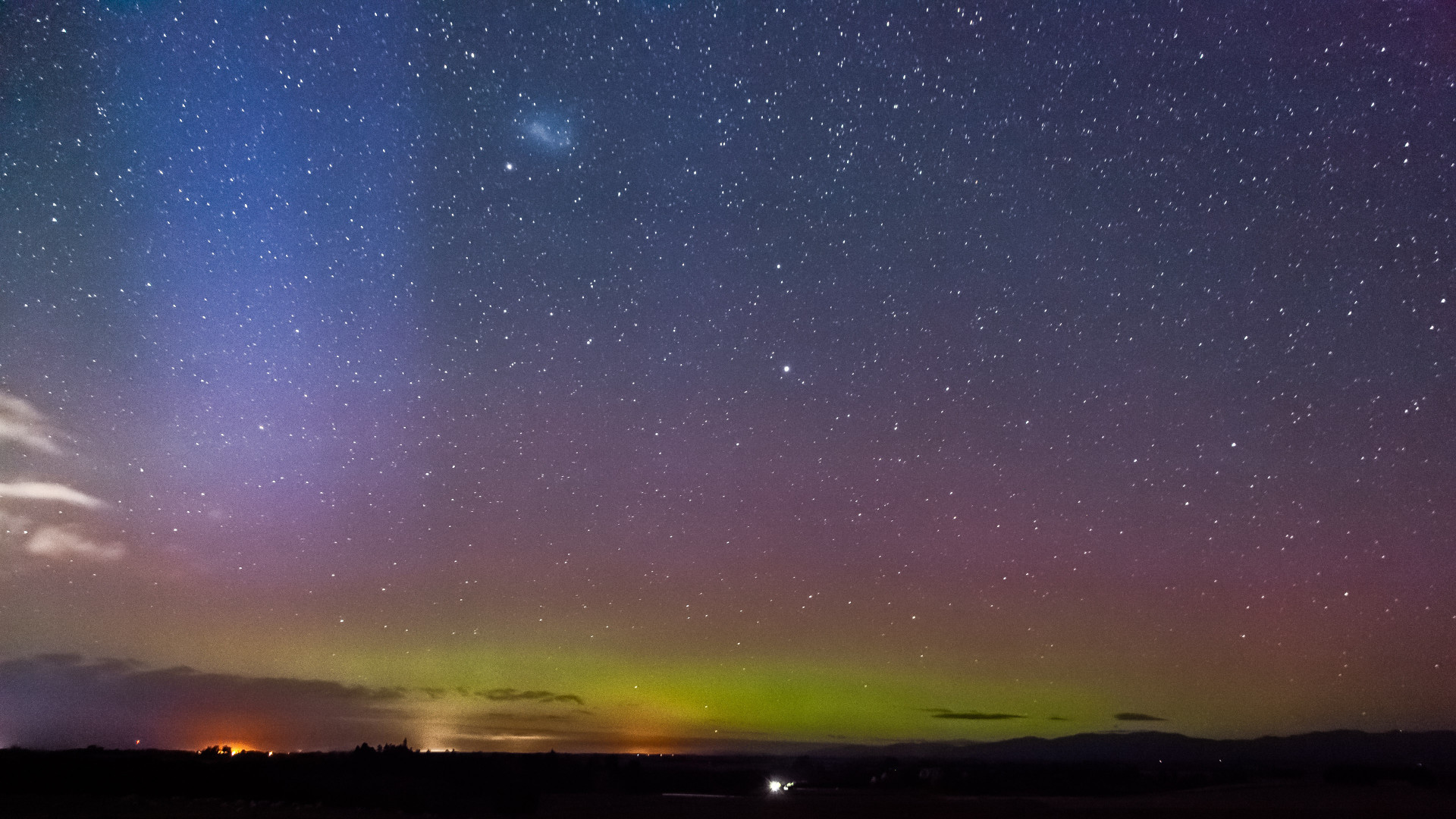
GBR the unexplained blue ray phenomenon
Aurora photographers have been observing an unexplained luminous night sky phenomenon, now dubbed the "Giant Blue Ray" (GBR). This has been inadvertently documented through ground-based photographs, primarily across southern Australia and New Zealand. Northern Hemisphere reports have also been noted. There is also a possible observation from Scott Base, Antarctica.
It was first identified in 2017 by two of our research group members Colin Legg and Ian Cooper. A similar event in 2021 stimulated further discussion on social media. A call for a review of photos revealed the effect from as early as 2013 with reports of others even a year earlier. So far about 40 events, recorded by about 70 photographers, are under investigation. Several visual sightings have been mentioned so far. Unlike the aurora, the GBR often extends beyond the top edge of super-wide angle photographs - simple testament to its gigantic size!
The largest show on Earth!
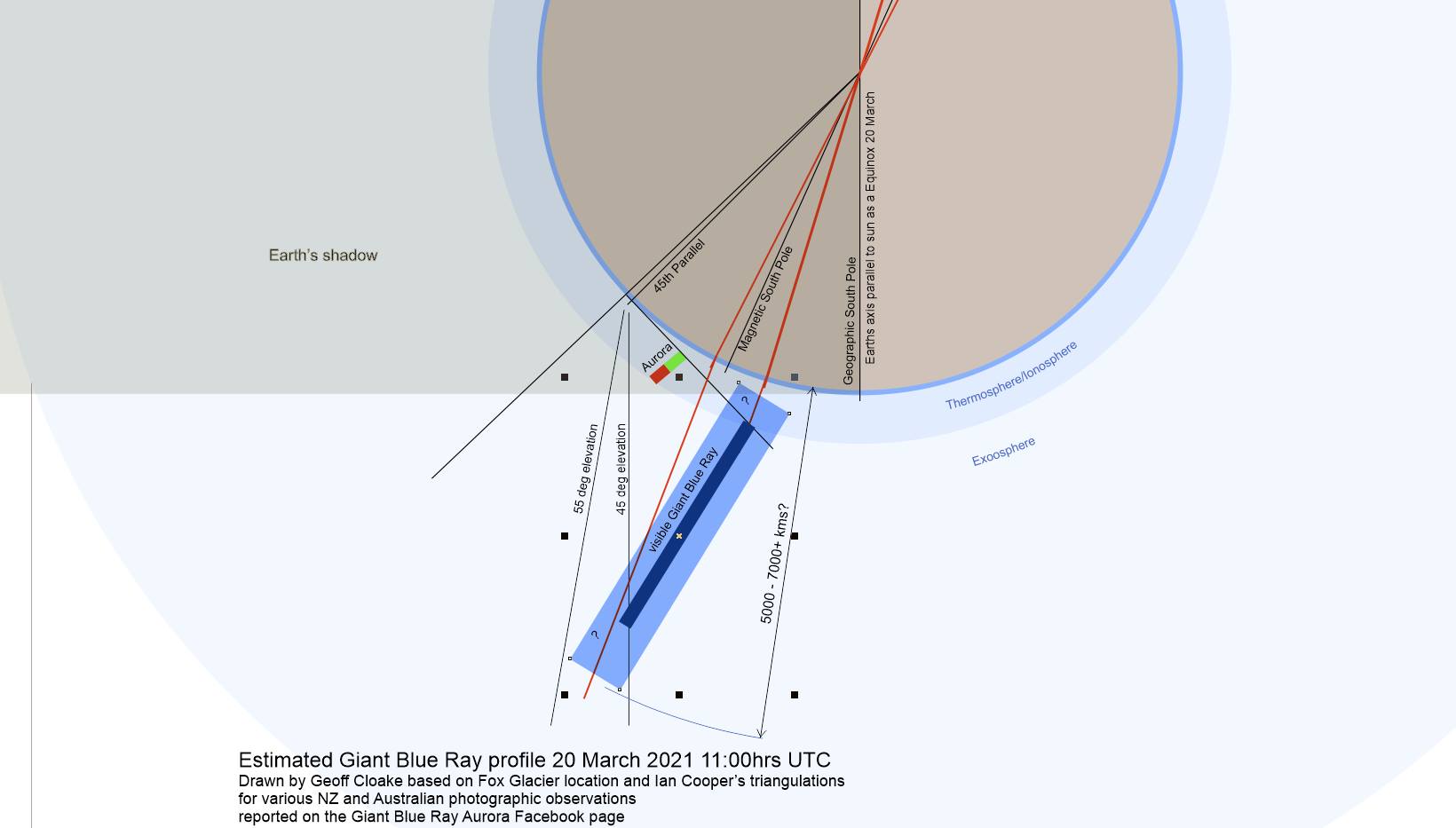
The GBR appears as an enormous yet localised faint blue ray-like structure extending from the night side of the Antarctic, and most likely the Arctic, circle to over 10,000 km in altitude. Preliminary analysis of photographs, timelapses, triangulation and mapping reveal the immense vertical and horizontal scale of the GBR. It differs exceptionally in size to aurora - which is already a pretty big show!.
Popular mid-latitude entertainment
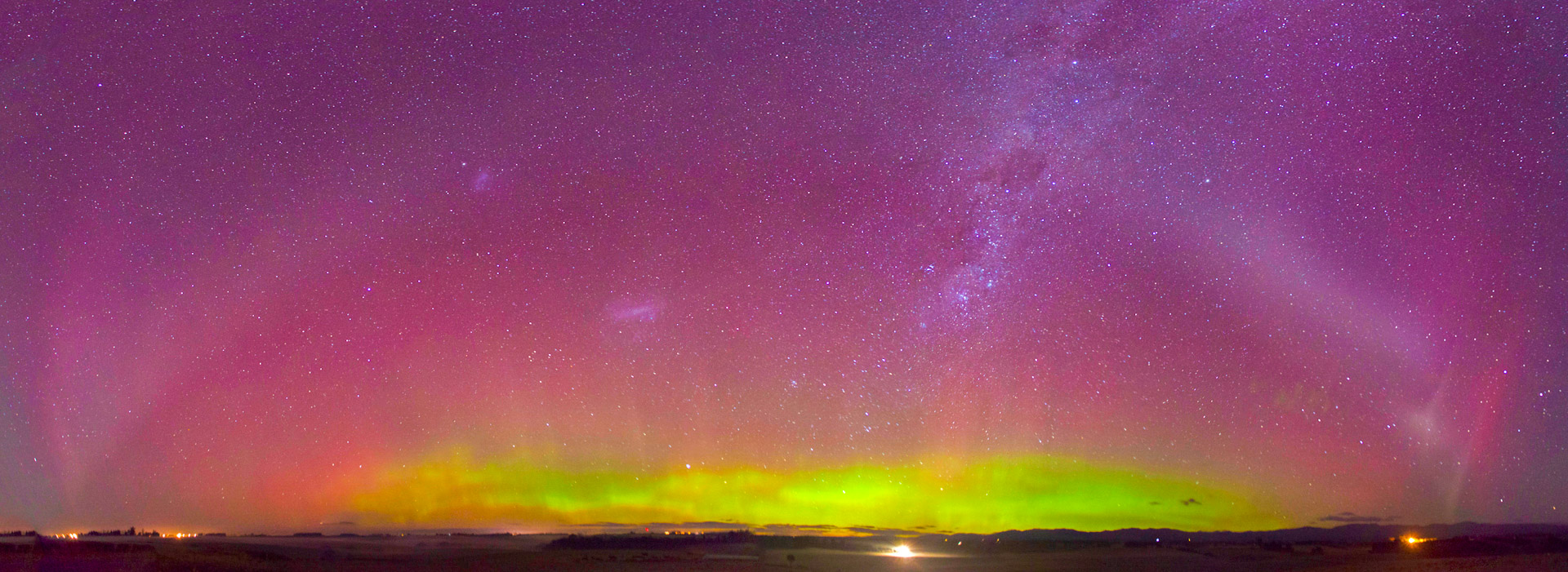
The recent appearance of the GBR in photos is thought due to a rapidly growing interest in the aurora driven by possession of quality cameras with low light capabilities and affordable super wide lenses. Social media popularisation has been explosive! Australasian Facebook pages have followers well in excess of a hundred thousand followers. Accordingly photography of the fainter, more distant aurora has become exceptionally popular from Australasian mid-latitudes. This is special because southern oceans prevent closer visits to the southern aurora zones - unlike the Northern Hemisphere where distant viewing is less thought of, even impossible due to light and sky pollution. On the plus side for us down-under, our oceans afford very clear views.
Repeatability confirms reality
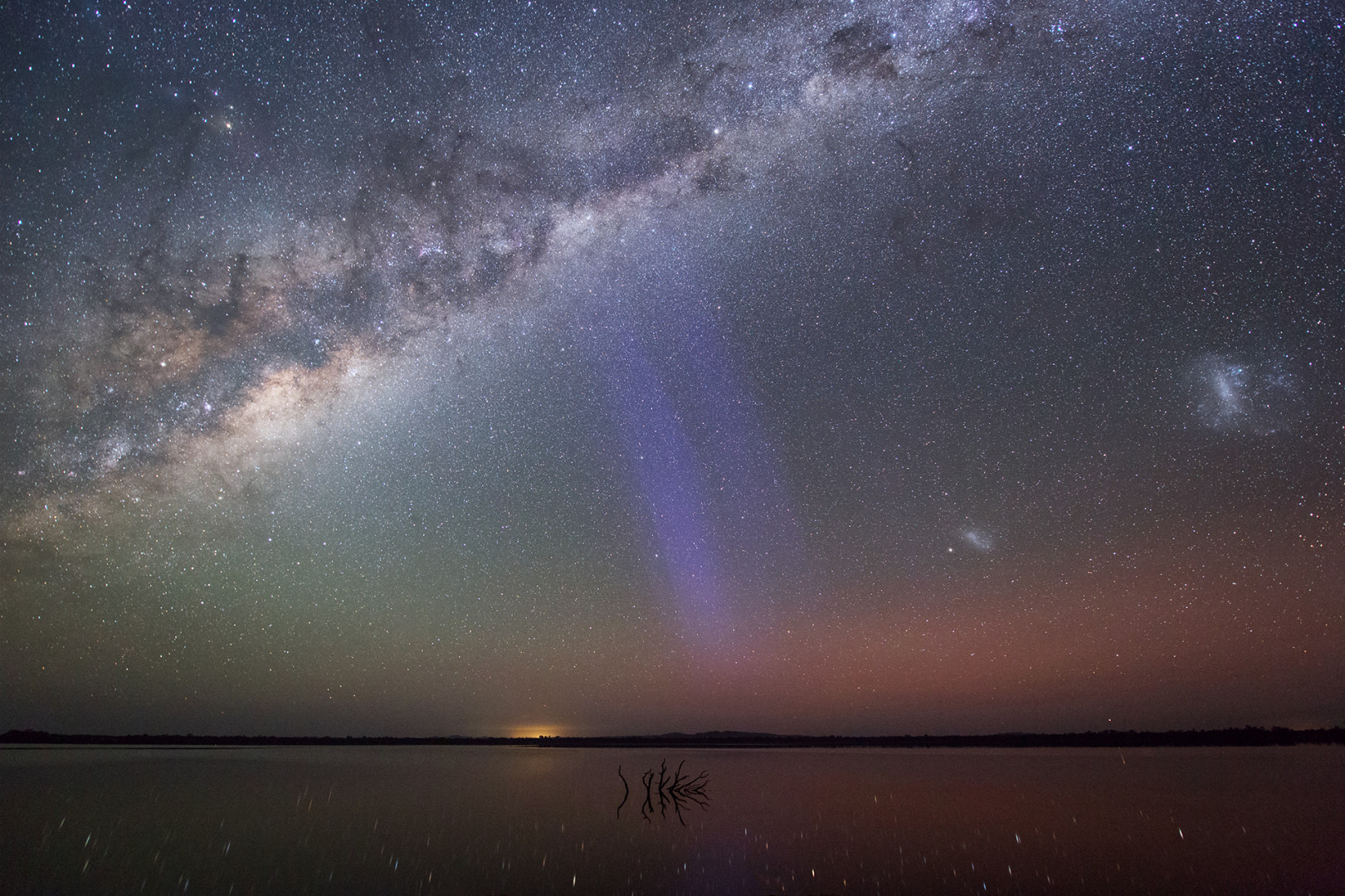
The aurora is seen in more totality from mid-latitudes, and in profile, which is leading to a range of new observations including the GBR. Timelapse sequences reveal it changes little in general appearance. Within an hour it stands more upright, taller, brightening a little, and often forms into several discrete rays that appear to rotate in a tight bundle before slowly fading way. Its place in the southern sky is much the same in photos. While known events maybe few in number, they do repeat and display the similar characteristics, demonstrating a real existence. This is not to be considered a new phenomena, just an existing one that has become recently apparent and lacking explanation.
Relationship to aurora and cause is unknown
The GBR stands out quite separately to known forms of aurora. Preliminary investigation points to a coincidence with geostorming and aurora oval positioning, But it appears to occur when ovals contract quickly and possibly before any recovery phase - all contrary to the expansion and breakup conditions favouring the aurora. It may occur during other circumstances too - when no one is out looking!
Collaborative study is warranted
Accordingly the GBR lacks definitive scientific explanation so far. Further study is needed to reveal its occurrence, mechanisms, optical emissions, relationship to the aural oval and magnetospheric processes. Impacts from the complex space weather system also need to be identified.
Therefore GBR, and especially a prominent event on March 27, 2017 are being closely studied by our Giant Blue Ray Research Group - a self-appointed team of citizen scientists working in collaboration with space science professionals. The goal is to characterise the phenomenon through continued photographic monitoring, correlation of conditions, modelling and hopefully, theorising. Publications on at least observations, characteristics, correlations and mechanisms are intended.
Our research group needs your help
Further observations, data contributions, and interpretation are highly encouraged as we unravel the mysteries of this unique large-scale luminous phenomenon.
High quality photos for study - please join and tell us about your observations and if you have photos we can use for the study. We will respect your rights and any need for confidentiality For more information visit our page about making contributions.
Learn more about making contributions
General observations and comments: please post to our Giant Blue Ray Aurora Facebook page.
Volunteers to assist with data and research - please contact any member of the research group listed here.